Catching the Giant Fish Underpinning Resilience in the Amazon
Field Visit

11/10/2026

Catching the Giant Fish Underpinning Resilience in the Amazon

Programme Manager Anne Nayral de Puybusque travelled to Amazonas state in Brazil to see how Instituto Juruá, one of the Trafigura Foundation’s newest partners, supports communities building a sustainable future around the pirarucu (Arapaima gigas), one of the world’s largest freshwater fish.

What was the main purpose of your visit?

We only recently began supporting Instituto Juruá, so it was important for us to get to know them better, to meet the team in the field and to understand in detail their goals, their operations, and the challenges they face. The insights that I have gained will help us to optimise the support that we provide going forward.

Where did you go?

I travelled to Carauari, a small town in the state of Amazonas. It lies deep in the rainforest on the Juruá River, where Instituto Juruá is based.

Instituto Juruá has become a key player in supporting local associations and communities in the sustainable management of pirarucu stocks in the area. It is one of several initiatives in Amazonas that combine conservation with sustainable economic development. 

As a donor, you can sometimes worry that you get only a superficial impression of the projects you support. This was not the case here, as I spent time embedded with some of the communities at the busiest time of year. It was quite an adventure!

IMG_5994
IMG_6048
IMG_6227

What did you witness on the ground?

This is when communities along the Juruá River, a major tributary to the Amazon River, mount their annual fishing expeditions. I visited four settlements, each a hive of activity, each at a different stage in the programme.

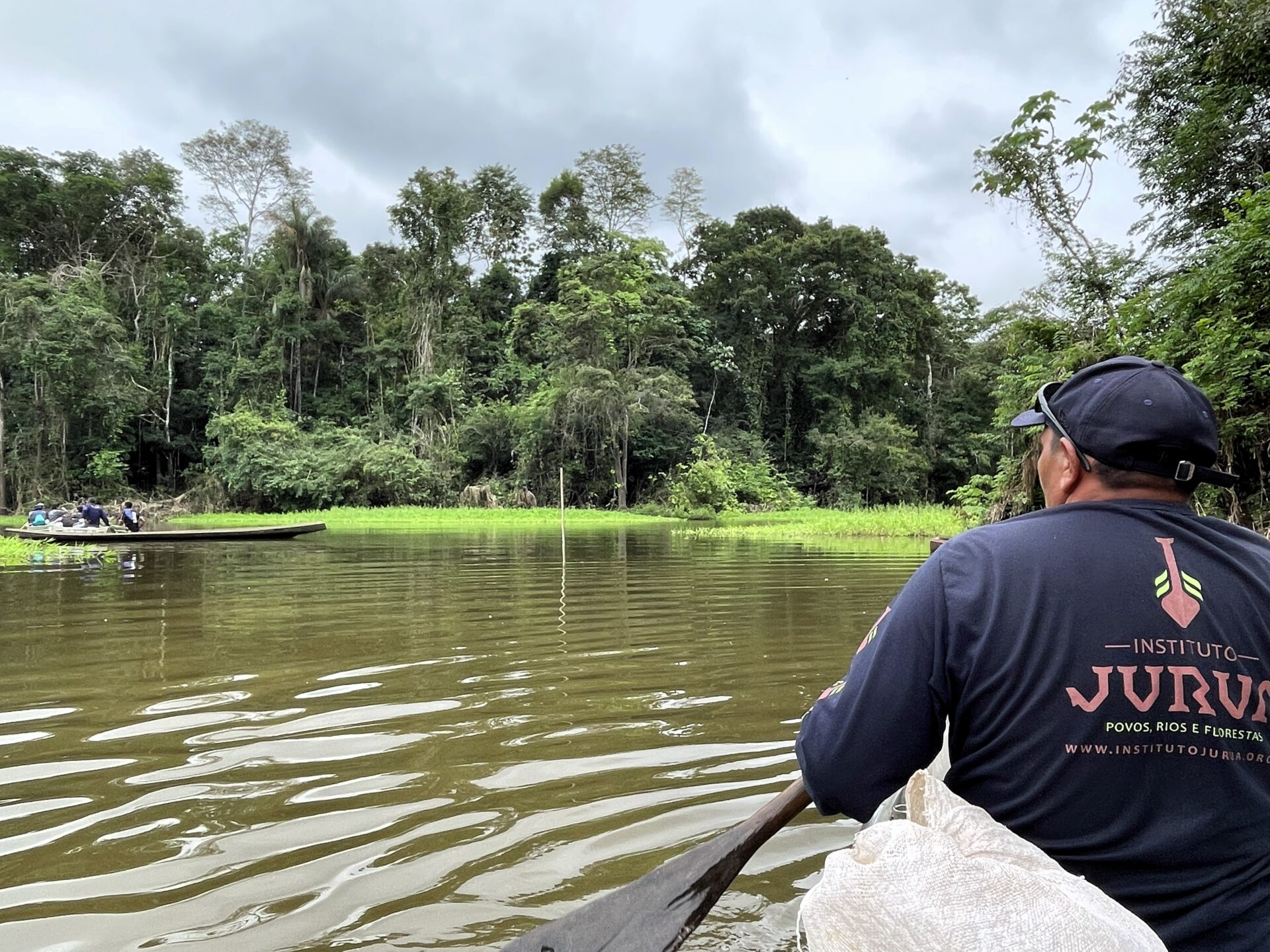
Most memorably, I joined an expedition near Morada Nova, six hours from Carauari by speedboat. People from five nearby communities were pitching tents by the river, kitting them out with bedding, cooking facilities and unpacking tools and equipment. Alongside, they had moored a boat with its hull filled with ice as a cold store. Everyone seemed to know their role, and you could feel the energy that each person was bringing to this important annual undertaking.

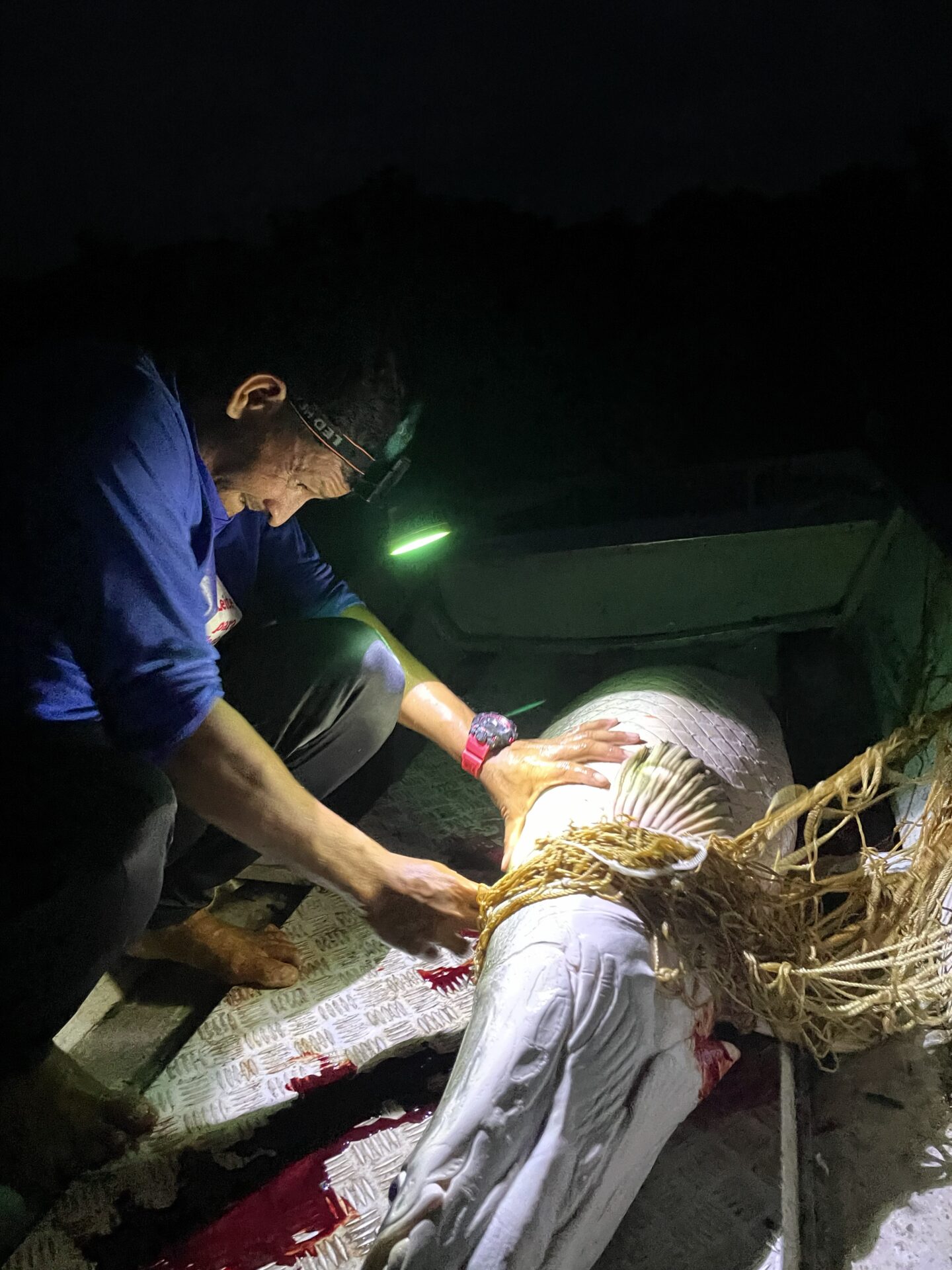
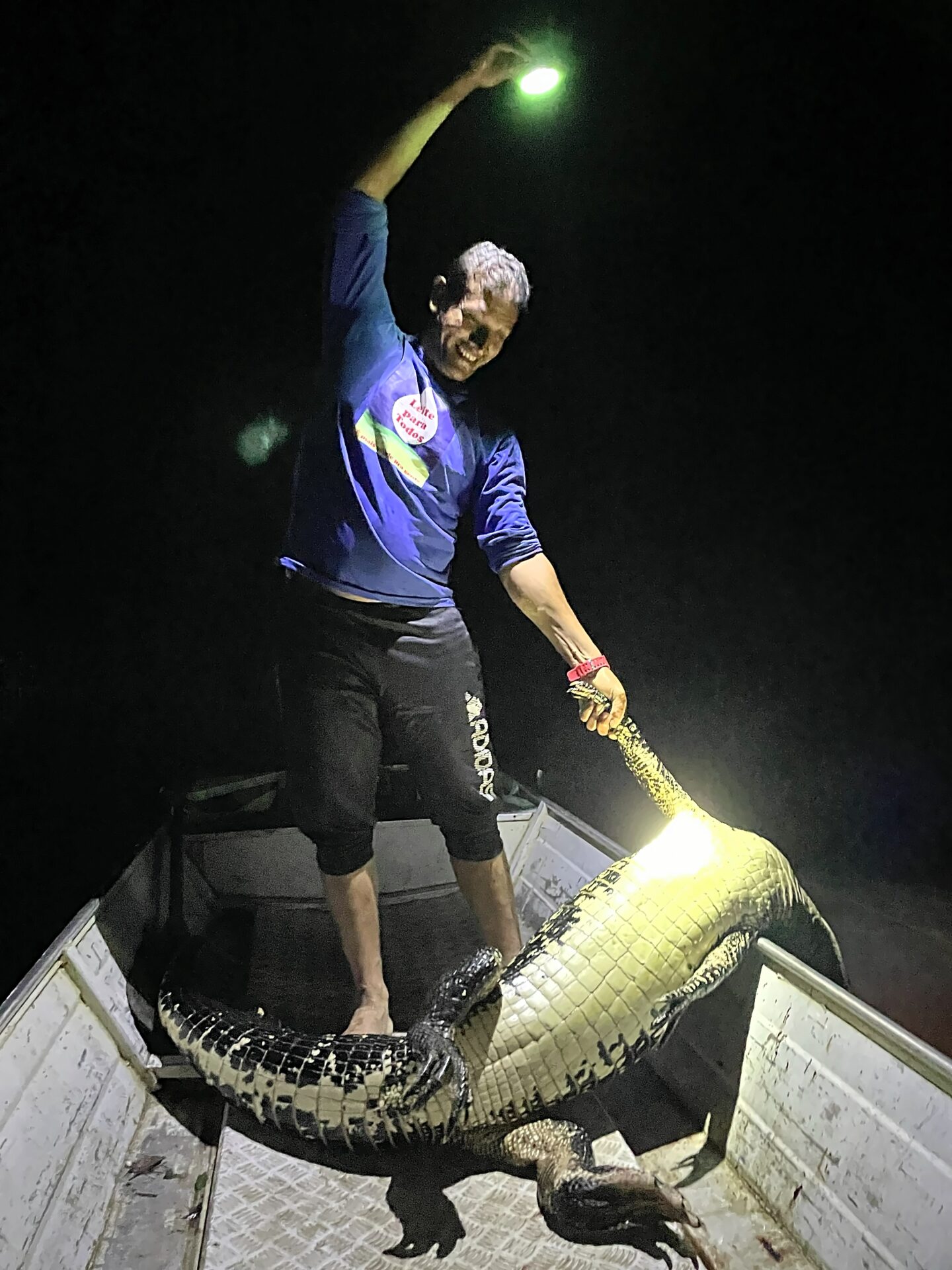
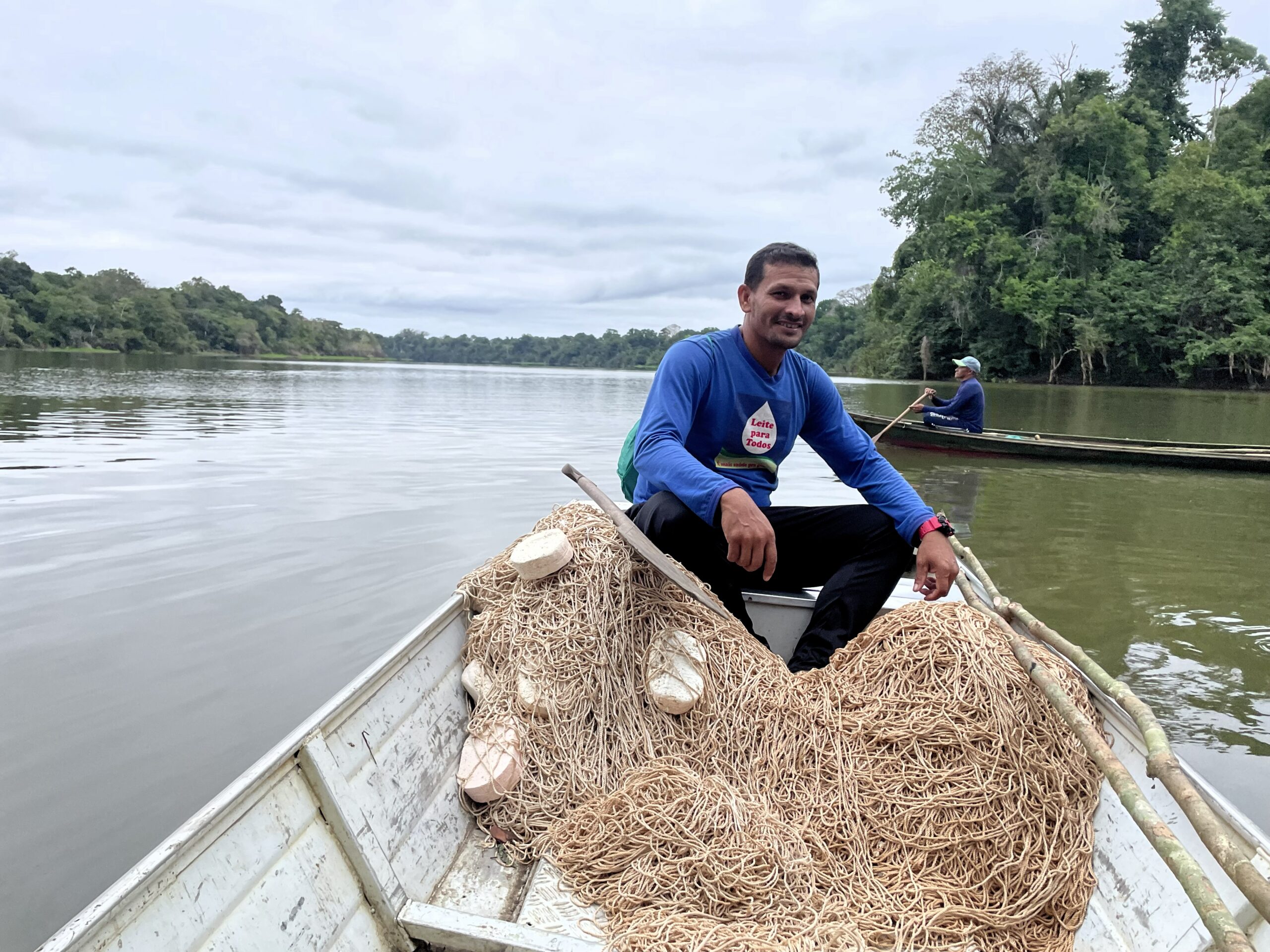
Later, the men rode canoes along smaller rivers to reach the fishing lake, where they fished from dusk to dawn for three consecutive nights. They use large-mesh nets designed to catch adult pirarucu measuring at least 1.5 metres in length. The two men in my boat had caught five fish by the time I left at 2 a.m. It was a fascinating experience – also because the lake is alive with caimans that also like to hunt at night!

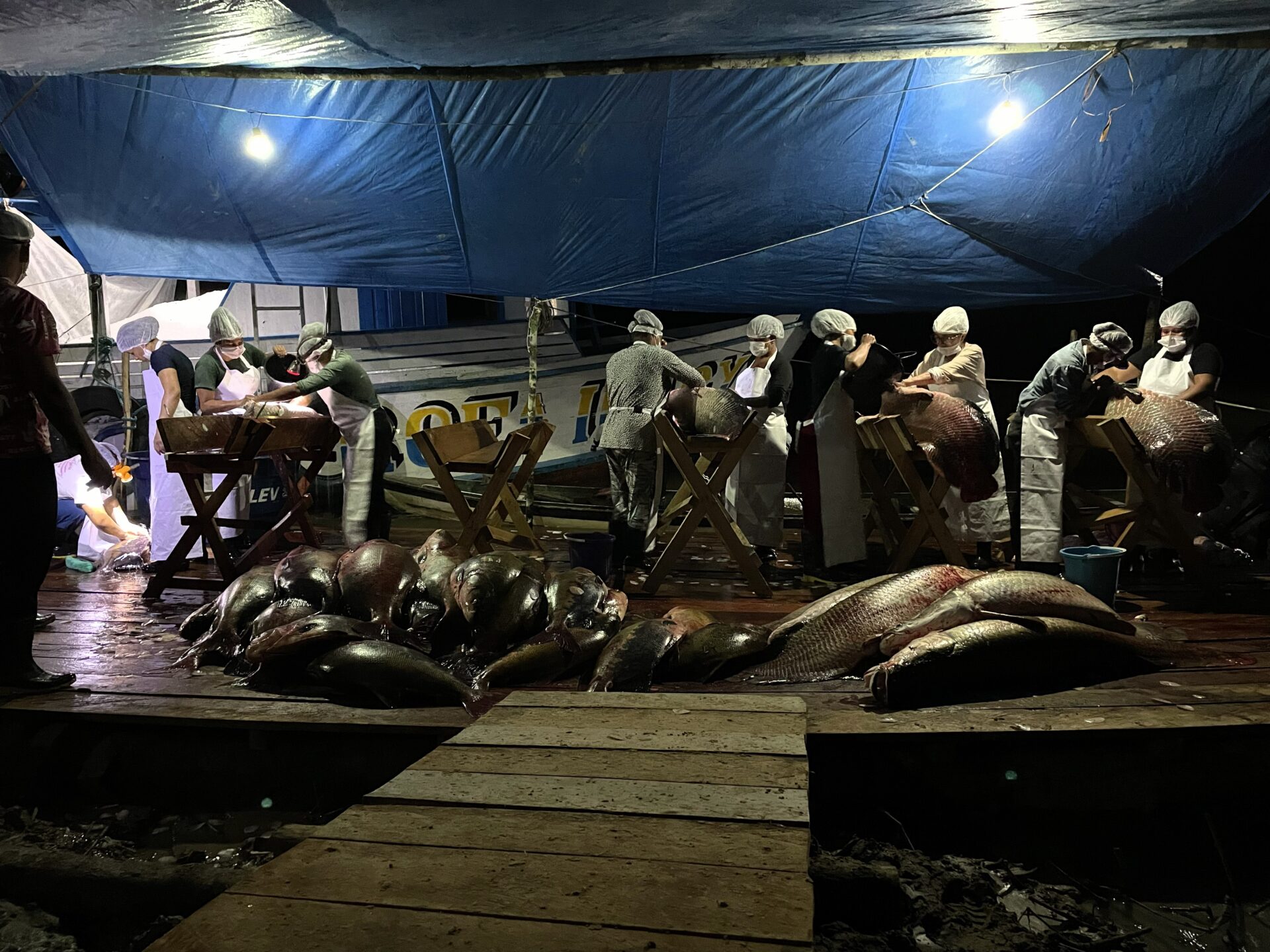
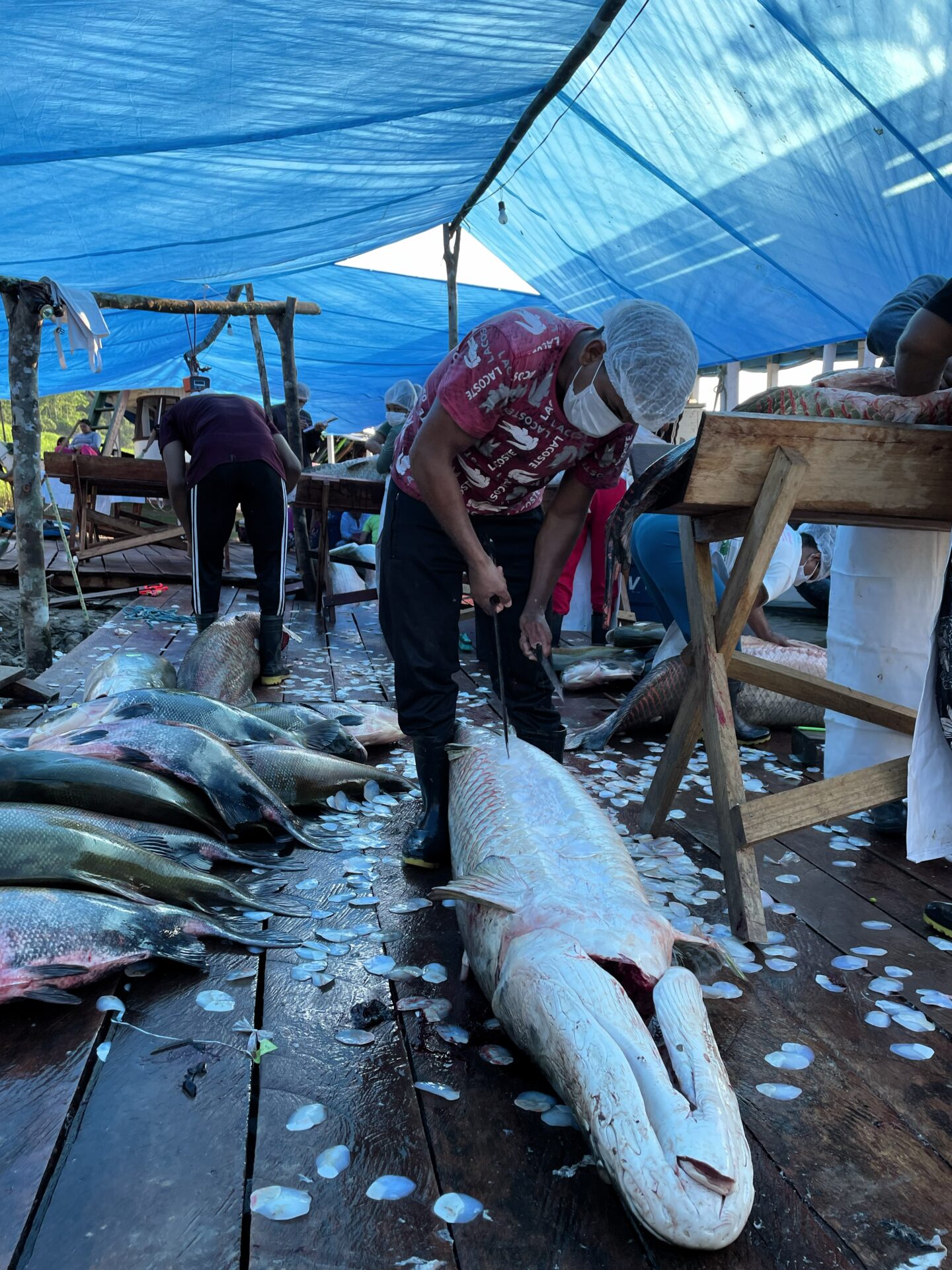
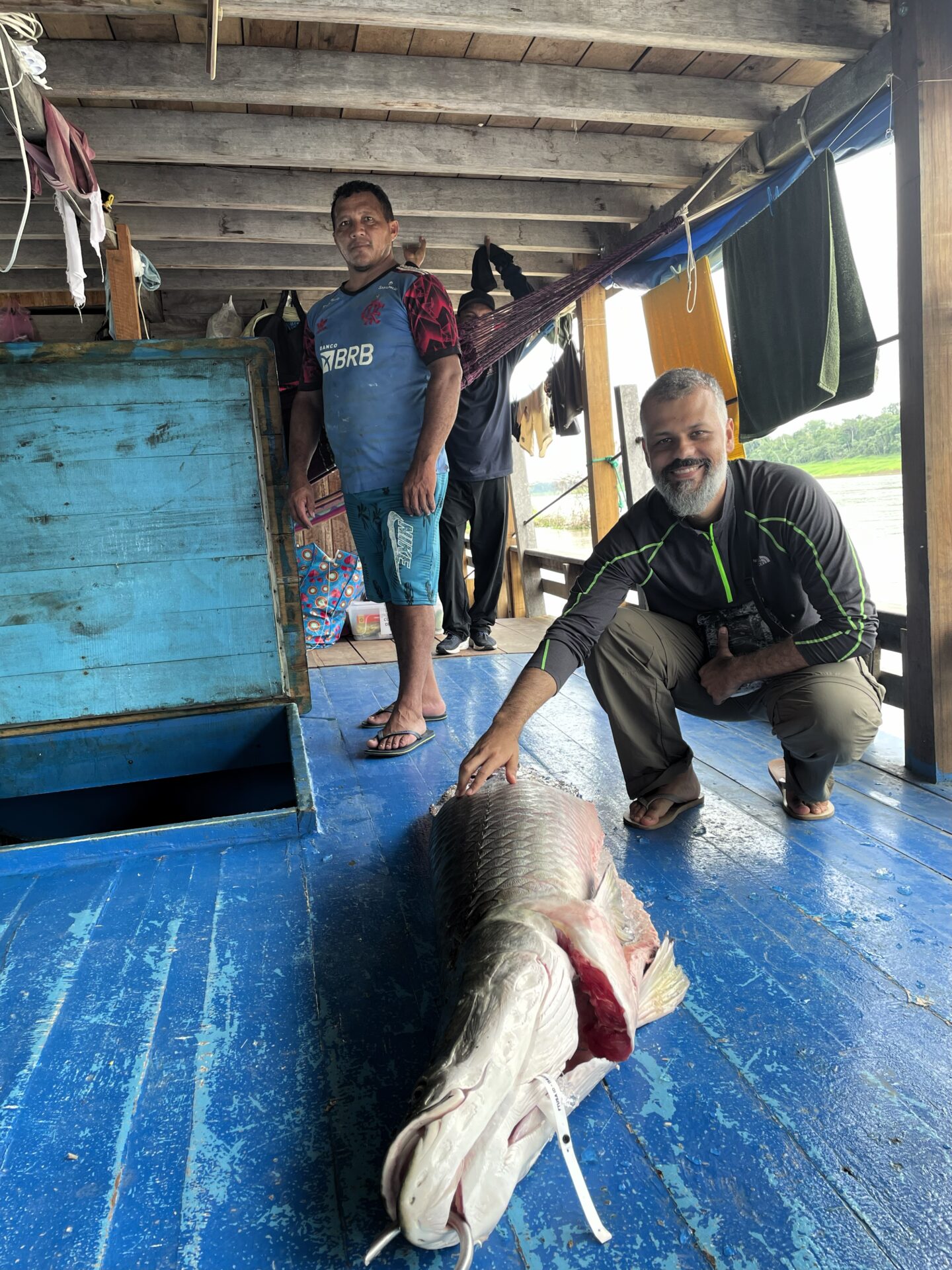
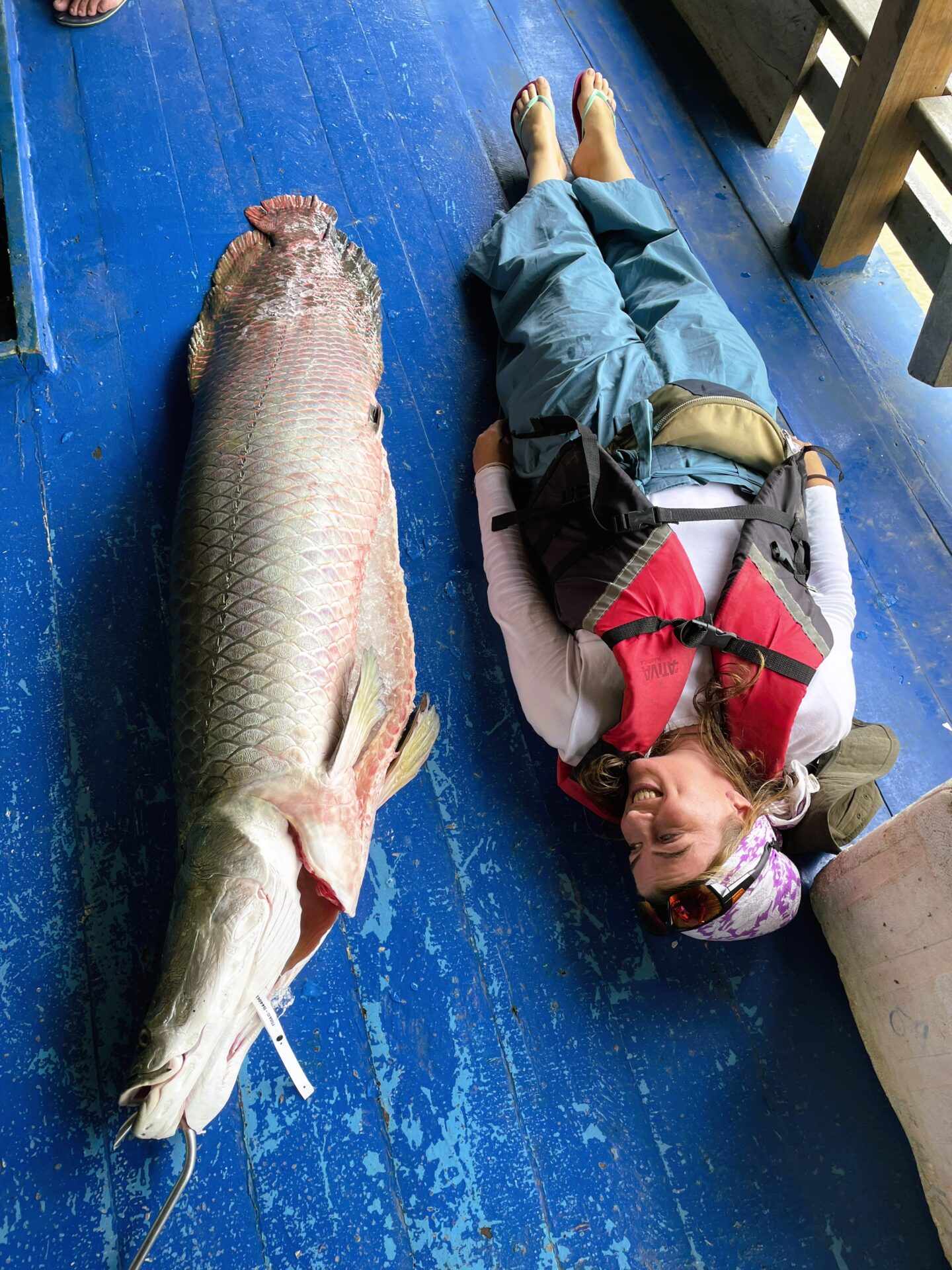
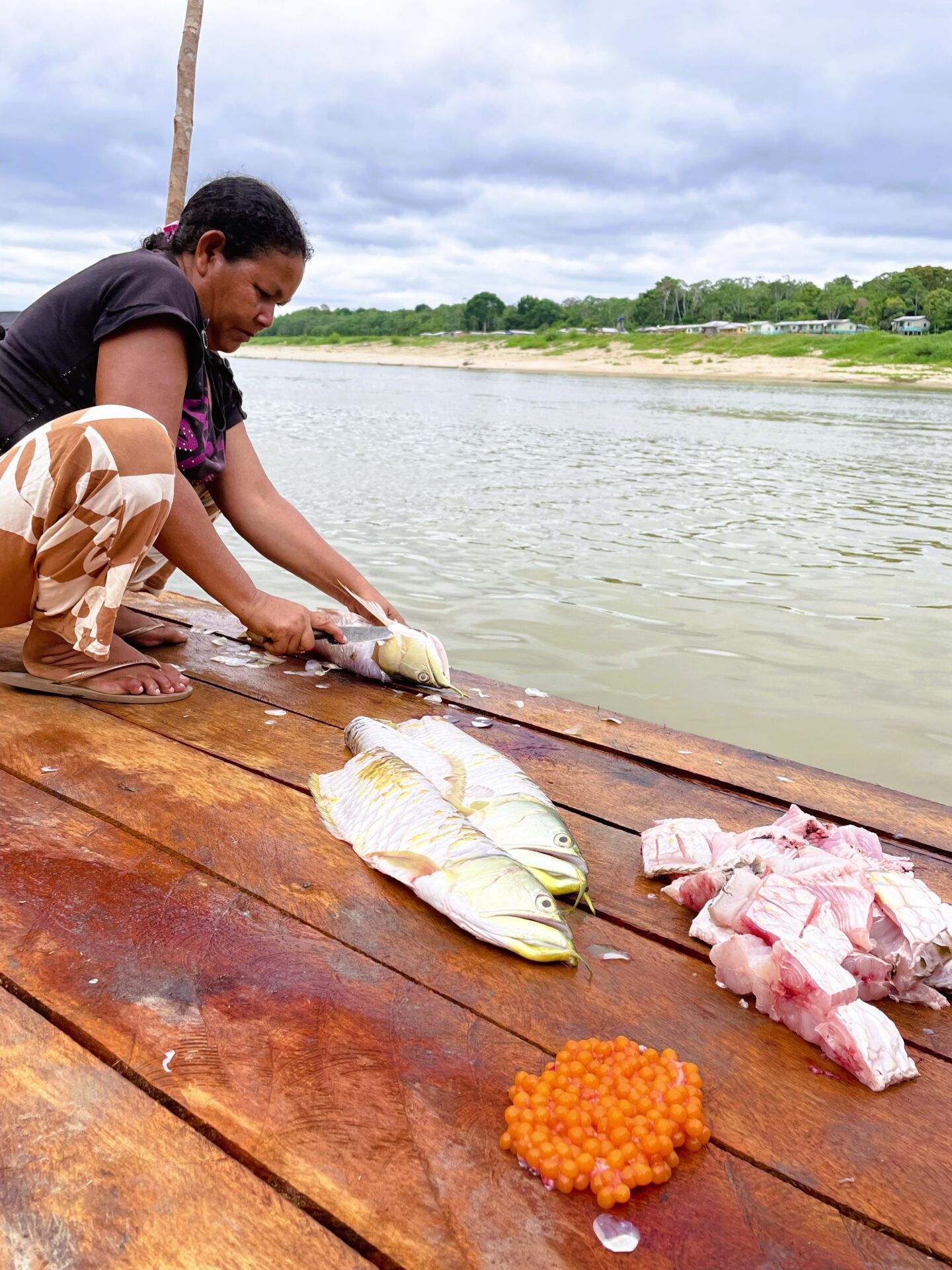
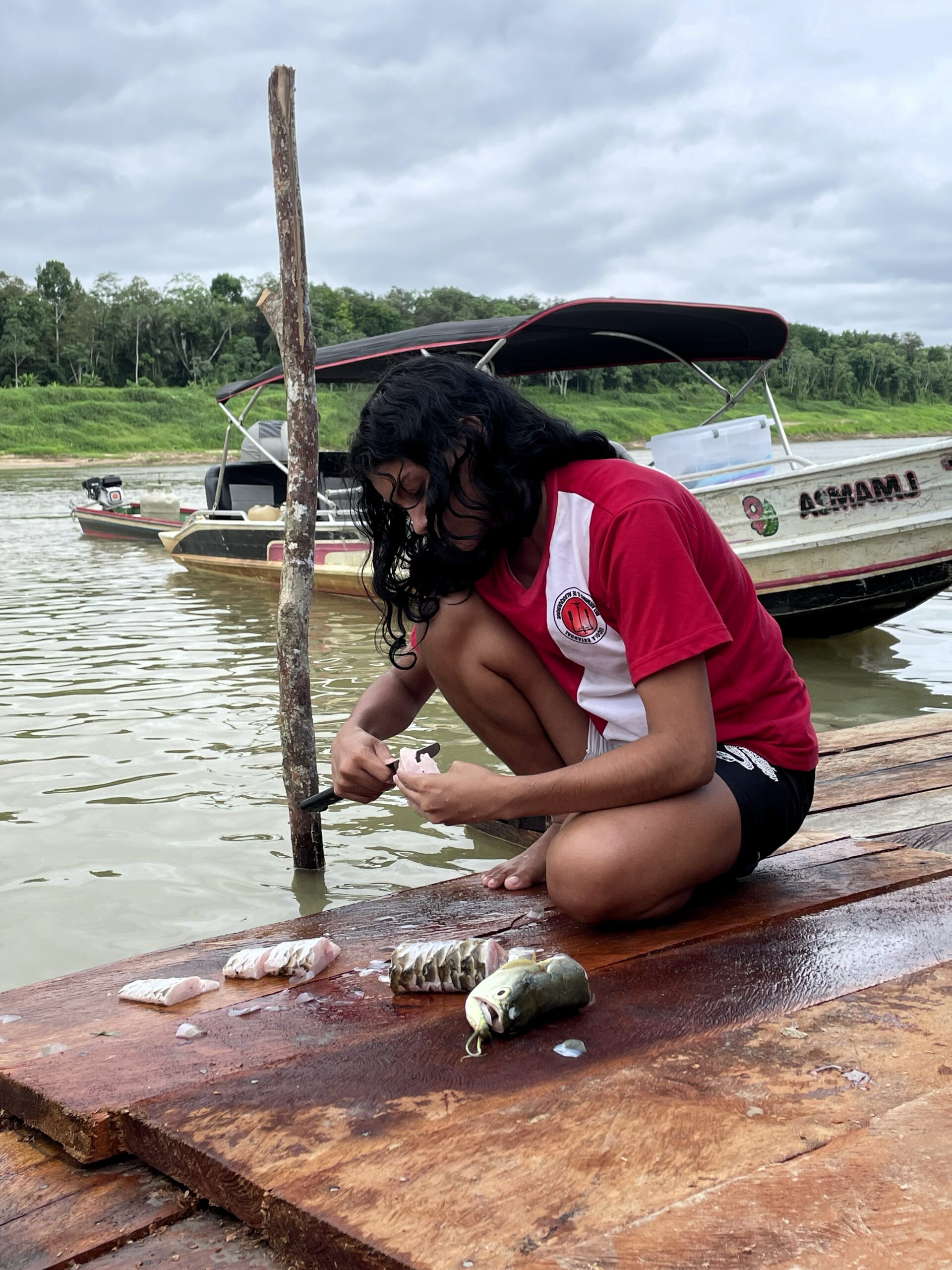
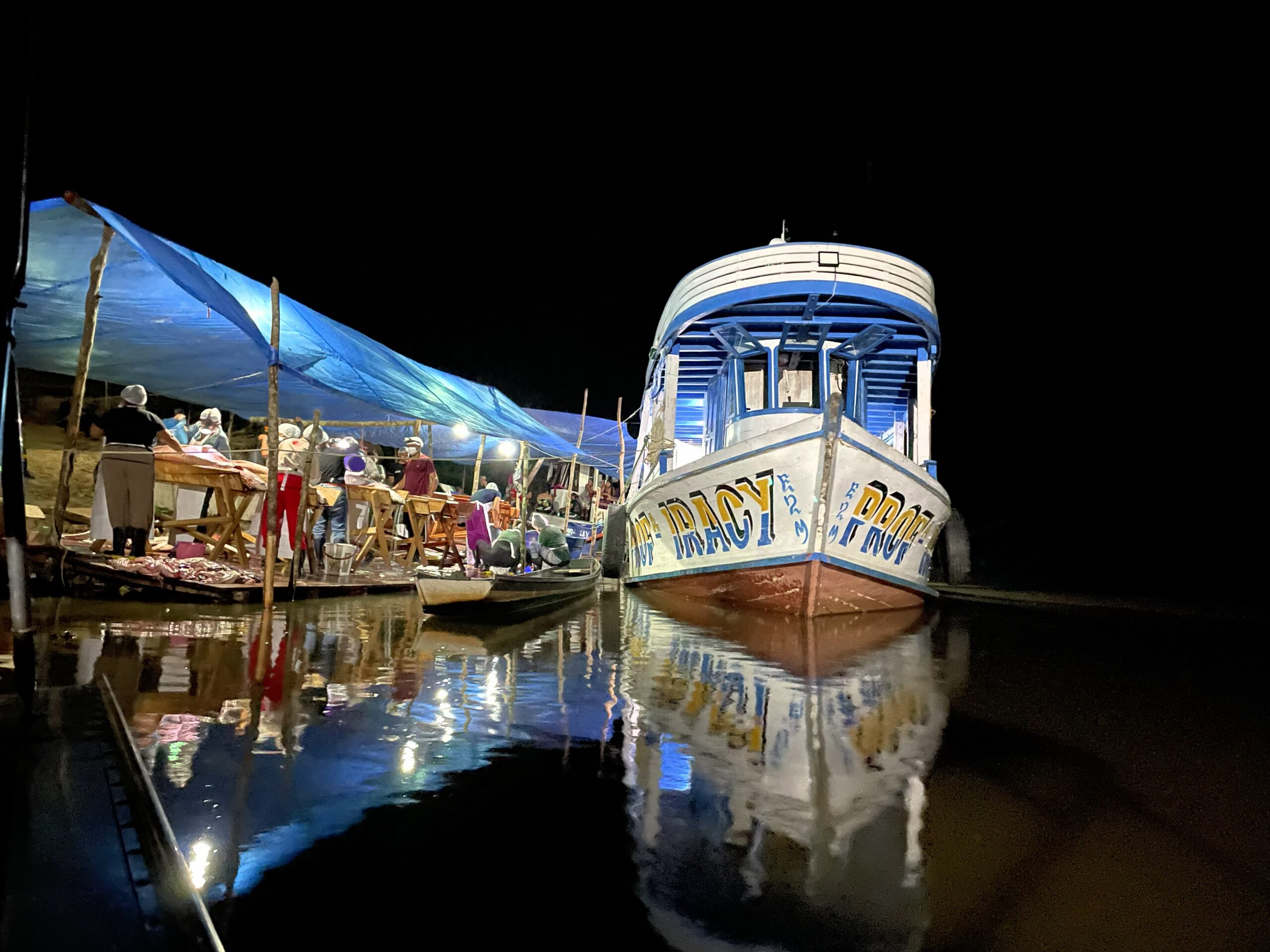
The men were allowed to catch 90 fish under their quota. The fish, which were about my size, were ferried on stretchers and tuk-tuks back to the riverside camp. There they were gutted and cleaned by the women, who played loud music to help them through the night.

It is hard work, and it is worth it. People earn about USD 500 each from the expedition, roughly one-quarter of the typical annual income. Significant shares of the revenue also go to pay for fishing infrastructure and community projects.


IMG_6256
IMG_6261_sharpened (1)
IMG_6269
IMG_6272

How do the quotas work?

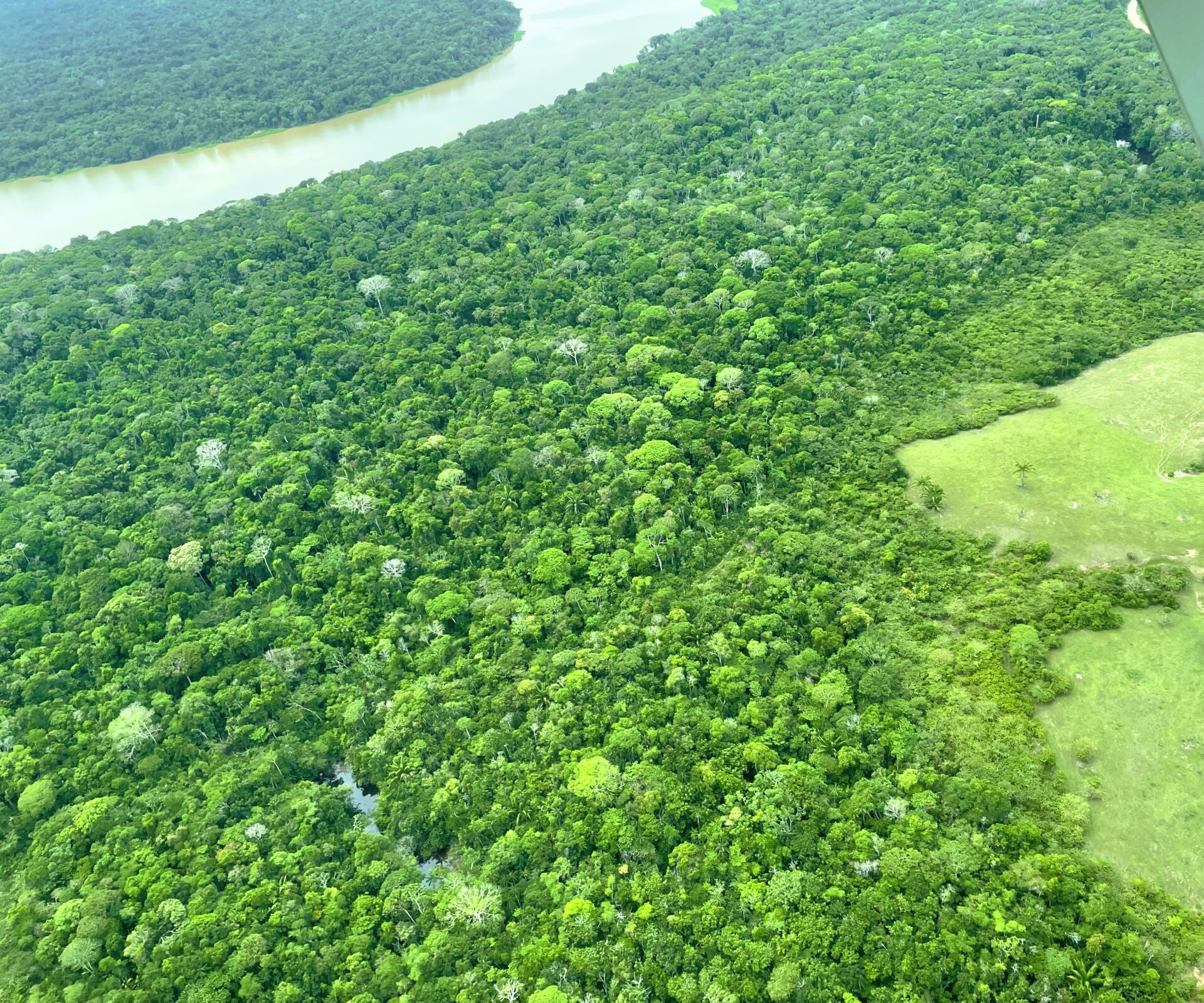
Overfishing severely depleted pirarucu populations in many parts of the Amazon. In Brazil’s Amazonas state, community-based management combines year-round lake protection with carefully regulated fishing. Communities establish rules that distinguish lakes where fishing is permitted from no-take lakes, which serve as refuges for fish populations.

Each year, trained local fishers count the pirarucu. The results provide the basis for Brazil’s federal environmental agency to establish an annual harvest quota of up to 30% of the adult fish counted in the management area. 

Groups of villagers take turns monitoring lake entrances and other strategic access points throughout the year. Their presence helps deter illegal fishing and can also discourage illegal logging, mining and other incursions, extending the benefits of lake protection to surrounding forests and wildlife.

IMG_6016
IMG_6017

How is sustainable resource management benefitting the communities?

With harvest quotas established and sale prices negotiated ahead of the fishing season, families can better anticipate their income, plan household expenses and collective investments. 

Unlike many other forest-based economies, pirarucu management generates a concentrated payment after a relatively short harvesting period. The harvest can provide substantial income for fewer harvesting days than most alternative activities. 

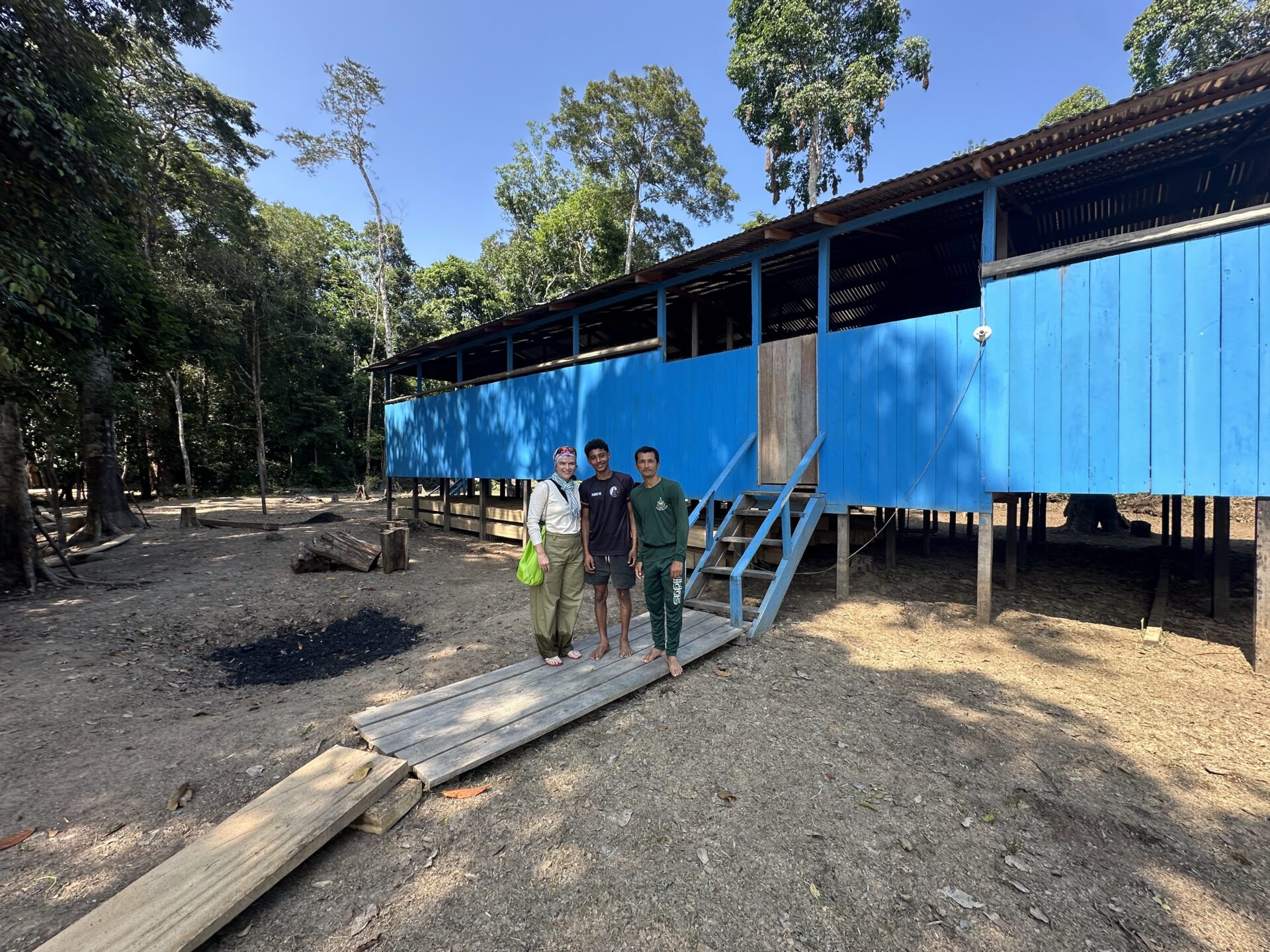
It was striking that communities with long-standing agreements are among the best developed in the area. One particularly remote village, an hour from the main Juruá River by canoe, had a solar installation supplying electricity to the entire village, good water and sanitation infrastructure, a school with three teachers, a library, a health centre, and a shop. The streets and houses were also well maintained. It felt like a good place to live. 

At the lake where they fish was a building where they process the catch, with metal fittings and a floor that is easy to keep clean as well as cold store powered with solar energy. It was simple and effective. They have plans to install air-conditioning, which would improve working conditions, because it gets very hot there in the dry season when the fishing is taking place.

At the other end of the spectrum, in a settlement that is closer to Carauari and recently started implementing a fishing agreement, the infrastructure was lacking, and people were cleaning fish on the riverbank with just a plastic sheet for shade. 

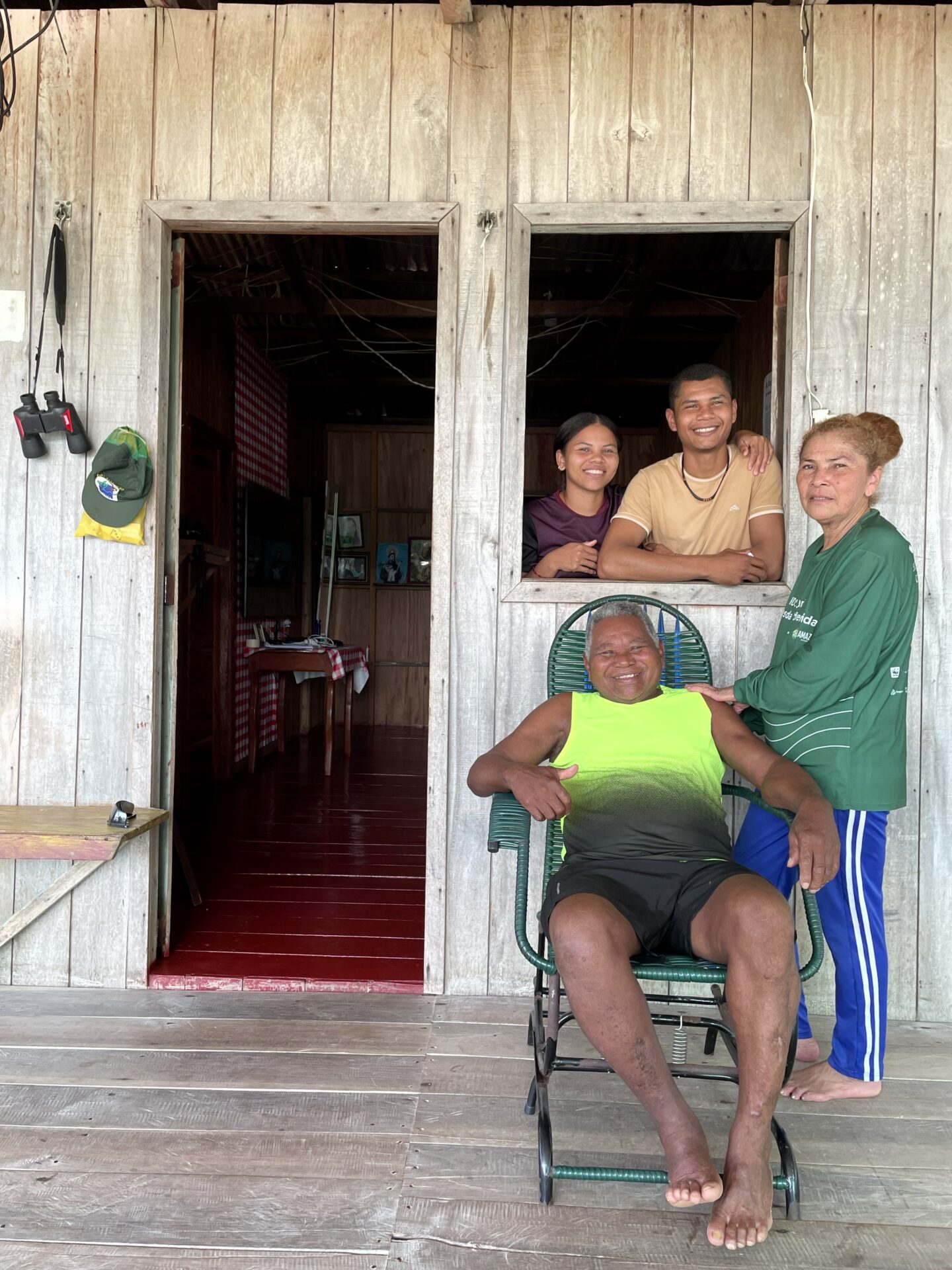
The benefits extend beyond income and infrastructure. Catching, carrying, processing and transporting these enormous fish requires highly coordinated teamwork. Men, women, elders and young people all contribute through different roles, strengthening cohesion and pride in the community.
IMG_6220
IMG_6277
IMG_6036

How much of this is down to Instituto Juruá?

By supporting collective planning and decision-making, Instituto Juruá fosters the strong local governance that is critical for the sustainable management of shared resources like the fish, and for the effective investment of the revenue generated in the communities.

Of course, the institute doesn’t operate in a vacuum; many actors are at play in these value chains. But that only illustrates perhaps our partner’s greatest strength, which is its strong connections in the communities and ability to collaborate with other players, including local authorities, businesses and researchers.

A good example is how the institute works with a local cooperative that is setting up a factory in Carauari to process the fish locally, creating local jobs and infrastructure, rather than shipping the catch to Manaus.

The visit reinforced our confidence in Instituto Juruá’s approach. We are also optimistic that it can be applied to other value chains, like açaí, and in other locations, in Brazil and Peru, maximising the benefits that flow from our support, and making both communities and ecosystems more resilient in the future.


Catching the Giant Fish Underpinning Resilience in the Amazon
It was striking that communities with long-standing agreements are among the best developed in the area. One particularly remote village had a solar installation supplying electricity to the entire village, a school, a library, a health centre and a shop. It felt like a good place to live.
Catching the Giant Fish Underpinning Resilience in the Amazon
Anne Nayral de Puybusque

Programme Manager

Catching the Giant Fish Underpinning Resilience in the Amazon